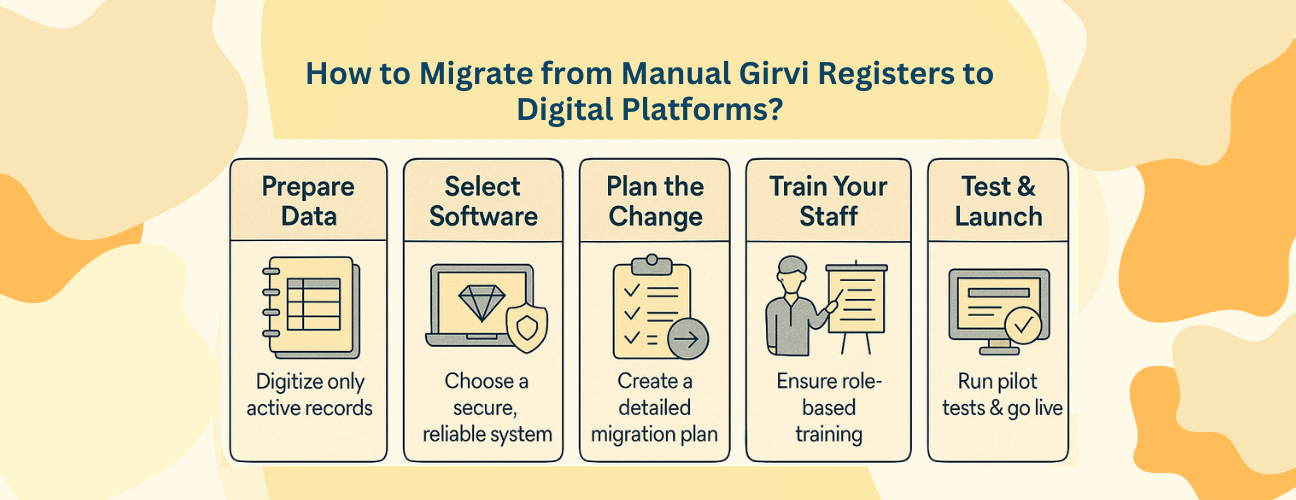
How to Migrate from Manual Girvi Registers to Digital Platforms
For generations, pawn (girvi) brokers have managed their businesses using handwritten registers. While this traditional method has served its purpose, it’s slow, prone to errors, and risky in today’s fast-paced business environment.
Migrating to a digital Girvi Management Platform can make your business faster, safer, and more profitable — but only if the transition is planned correctly. Here’s a step-by-step guide to move from manual to digital without disrupting your daily operations.
1) Understand Why You’re Migrating
Before starting, be clear about what you want to achieve:
- Faster loan processing
- Fewer calculation errors
- Secure record keeping
- Better compliance with RBI & KYC norms
- Multi-device access to your data
Having a clear goal helps you choose the right software and migration plan.
2) Choose the Right Digital Platform
Select a Girvi Management Software that fits your business needs. Look for:
- User-friendly interface for easy adoption
- Automated interest and maturity calculations
- Cloud storage with secure backups
- Digital KYC and customer history management
- Multi-branch support (if needed)
Tip: If you serve multiple towns or branches, pick a cloud-based solution for real-time data sync.
3) Prepare Your Existing Records
Migration success starts with clean and organised data:
- Review all active loans and pledged items
- Correct any missing or inaccurate details
- Organise customer contact information and ID proofs
4) Digitise Your Data
You can move records to the new platform by:
- Manual entry (best for smaller loan books)
- Excel/CSV upload (ideal for larger databases)
- Data entry services for bulk migration
Tip: Start by migrating only active loans first. Past records can be added gradually.
5) Train Yourself & Your Staff
Switching to digital is not just about technology — it’s about people.
- Provide hands-on training for creating loans, calculating interest, and generating receipts
- Teach staff how to search records, send reminders, and handle KYC uploads
- Offer refresher sessions after the first month
6) Run Parallel Systems for a Short Period
To ensure a smooth transition:
- Continue using your manual register alongside the new software for 1–2 weeks
- Verify that all interest calculations and maturity dates match
- Fix any data errors before going fully digital
7) Go Fully Digital
Once you’re confident the system works:
- Stop recording in manual ledgers
- Process all new loans directly in the software
- Use cloud backup to secure your data
8) Monitor, Optimise & Update
- Regularly review reports to track performance
- Update customer data whenever needed
- Stay current with software updates for security and features
Conclusion
Migrating from manual girvi registers to a digital platform is one of the best investments you can make for your pawn business. It reduces errors, speeds up operations, keeps your records secure, and helps you provide a professional, customer-friendly service. The key is planning your migration carefully so you can enjoy the benefits of digital without business interruptions.