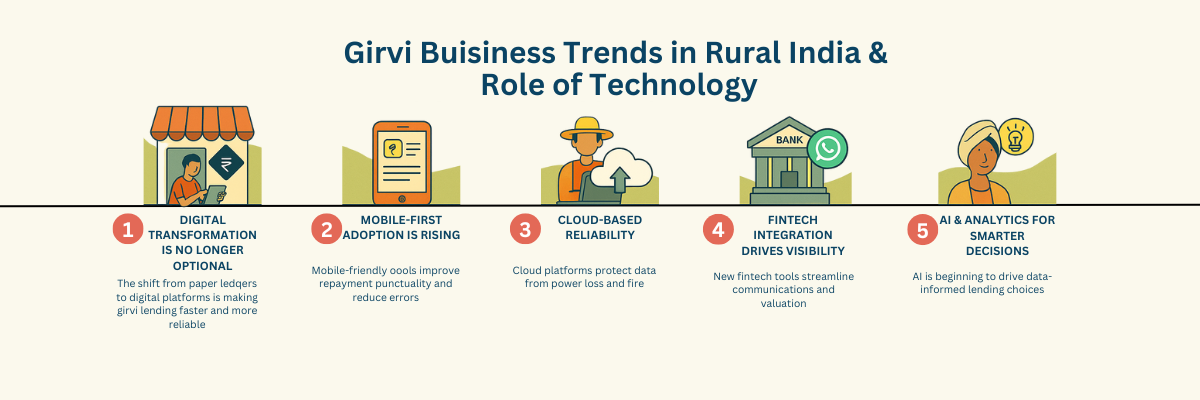
The girvi (pawn) business has been a cornerstone of rural India’s informal financial system for generations. Offering quick loans against gold, silver, or other valuables, it has provided a vital lifeline for farmers, small traders, and households facing urgent expenses. In recent years, however, the industry has undergone a quiet revolution. Customer expectations are rising, regulations are tightening, and technology is emerging as the key driver of change.
This detailed guide explores the latest trends in rural India’s girvi business and the role that technology plays in transforming how pawn brokers operate in 2025 and beyond.
1. Rising Demand for Quick & Hassle-Free Loans
In rural India, time is money. Whether it’s funding the purchase of seeds before monsoon planting or covering medical expenses, borrowers need funds fast. Waiting hours or days for approval can be a deal-breaker.
Trend:
Customers increasingly favour pawn brokers who can process loans in minutes rather than hours. Delays caused by manual calculations and paperwork are pushing customers towards tech-savvy operators.
Technology’s Role:
- Automated Processing: Girvi Management Software calculates interest instantly based on principal, rate, and duration.
- Instant Documentation: Loan agreements and receipts can be generated within seconds.
- Reduced Wait Times: Digital workflows cut loan approval time from hours to mere minutes.
2. Shift from Paper Registers to Digital Records
For decades, rural pawn brokers have relied on handwritten registers, often stacked in cupboards or drawers. While familiar, these records are prone to errors, loss, and slow retrieval.
Trend:
A growing number of rural brokers are adopting digital record-keeping, moving away from bulky paper ledgers to secure, cloud-based systems.
Technology’s Role:
- Cloud Storage: Transactions and customer data are stored securely online, protected from fire, theft, or damage.
- Quick Search: Digital platforms allow brokers to retrieve old loan details within seconds.
- Legal Compliance: Records are automatically organised for audits and inspections.
3. Increased Focus on Legal Compliance
RBI guidelines and state-level regulations are making compliance more critical than ever, even for small-town brokers. Authorities are paying closer attention to interest rates, KYC procedures, and documentation standards.
Trend:
More frequent inspections are being conducted in rural areas, ensuring pawn brokers follow due process.
Technology’s Role:
- KYC Storage: Scanned copies of Aadhaar, PAN, or voter ID are linked to each customer profile.
- Automated Limits: Software prevents setting interest rates above legal limits.
- Standardised Documents: Agreements are auto-generated with all necessary compliance clauses.
4. Mobile-First Solutions for Remote Access
While internet connectivity in rural India is improving, desktops are not always accessible. Pawn brokers need tools they can use on the go.
Trend:
Mobile-based girvi applications are gaining ground, enabling brokers to manage loans from smartphones.
Technology’s Role:
- On-the-Go Operations: Brokers can approve loans, check balances, and send reminders directly from their phones.
- Multi-Location Access: Perfect for brokers managing multiple branches or visiting customers at home.
- Offline Mode: Some apps allow transactions without internet, syncing when connectivity resumes.
5. Automated Customer Communication
In rural communities, due dates can slip customers’ minds — especially during busy agricultural seasons. This often leads to delayed repayments or disputes.
Trend:
Pawn brokers using automated reminders have higher repayment rates and fewer overdue accounts.
Technology’s Role:
- SMS & WhatsApp Alerts: Automatic reminders notify customers before interest or loan maturity dates.
- Custom Messaging: Messages can be sent in the local language for better understanding.
- Improved Cash Flow: Timely payments mean better liquidity for the broker.
6. Digital Payments & Cashless Transactions
The adoption of UPI and mobile wallets is spreading rapidly in rural India. Customers, especially the younger generation, prefer digital transactions over cash.
Trend:
Pawn brokers who accept digital payments are attracting more customers and avoiding risks associated with cash handling.
Technology’s Role:
- UPI Integration: Many girvi software solutions now support direct payment links.
- Transaction Tracking: Digital payments leave a verifiable trail, reducing disputes.
- Faster Settlements: Instant transfers improve business liquidity.
7. Data-Driven Decision Making
Traditionally, rural pawn brokers have relied on personal judgement and experience to make business decisions. While valuable, this approach lacks precise insights.
Trend:
Data analytics is becoming a part of even small-town pawn operations, offering a clearer picture of business performance.
Technology’s Role:
- Profitability Reports: Identify which loan types and durations are most profitable.
- Customer Segmentation: See which customers are most reliable and profitable.
- Overdue Tracking: Spot trends in delayed payments and take preventive measures.
8. Bridging the Urban-Rural Gap
Urban pawn shops have had access to advanced technology for years, but rural areas are catching up fast. Affordable smartphones, better internet, and low-cost software subscriptions are levelling the playing field.
Technology’s Role:
- Cost-Effective Tools: Subscription-based software reduces upfront costs for rural brokers.
- Training Support: Many software providers offer remote training in regional languages.
- Scalability: Rural businesses can start small and expand features as they grow.
Conclusion
The girvi business in rural India is evolving rapidly. Where once bulky registers and slow approvals defined the trade, today’s rural pawn brokers are embracing cloud storage, mobile apps, automated reminders, and digital payments.
Technology is not replacing the trust-based relationships that have always been the foundation of this business — it is strengthening them. By offering faster service, better compliance, and modern conveniences, tech-savvy rural pawn brokers can compete effectively with banks and urban operators.
In 2025 and beyond, the winners in the rural girvi sector will be those who blend tradition with technology, preserving the personal touch while delivering speed, accuracy, and compliance through digital tools.